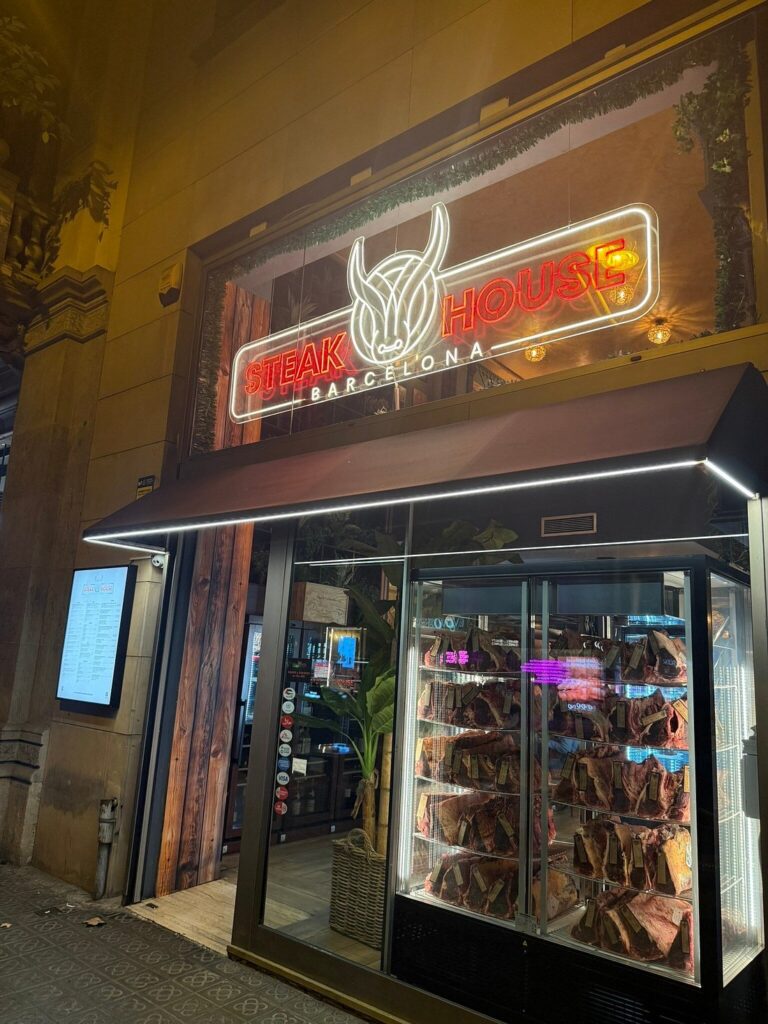
We first paid it real attention in Singapore — not at a gate, where we’d watched the silver cases glide past for years, but inside a room that was entirely theirs. A whole boutique of them, which back home you simply do not see; in our corner of the world RIMOWA barely turns up in the department stores, let alone behind its own front door. We didn’t pick one up. It didn’t feel like a thing you grab off a shelf. We moved around the room slowly, the way you do in a gallery, read the little cards priced in Singapore dollars, and quietly decided not to convert them. It just looked like a lot.
The short version: the RIMOWA Classic Check-In L is a genuinely exceptional object — anodised aluminium, leather handles, engineered to outlast the person carrying it. You do not need it; almost nobody does. The price resists any rational defence. And yet, if the money is immaterial to you and you love the way things are made, it is worth buying without hesitation. The honest catch, before we go a word further: it is heavy, and it will scratch.
At a glance
- Collection: RIMOWA Classic — the heritage aluminium line, with leather handles
- Size: Check-In L, 79 × 52 × 28 cm
- Weight: 6 kg, empty
- Capacity: 84 litres — RIMOWA reckons on roughly a fortnight’s travel
- Shell: anodised aluminium; polyester lining; leather grips
- Rolling & security: Multiwheel spinners, TSA-approved locks, height-adjustable Flex Divider
- Guarantee: lifetime cover on functional damage, once registered
- Made: designed in Germany
- Colours: silver, black, titanium
- Price: patience — it’s waiting for you at the bottom
Stripped back to almost nothing
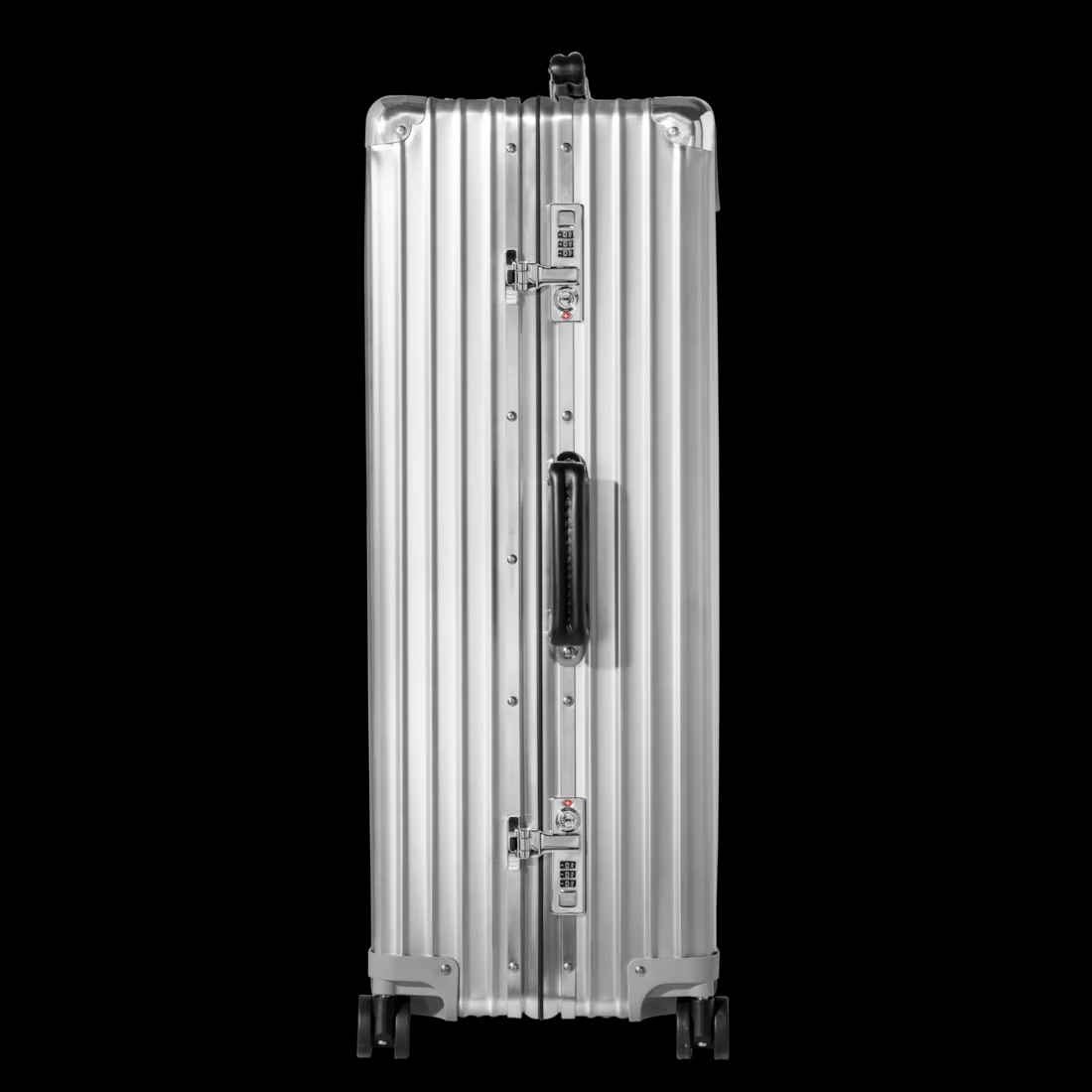
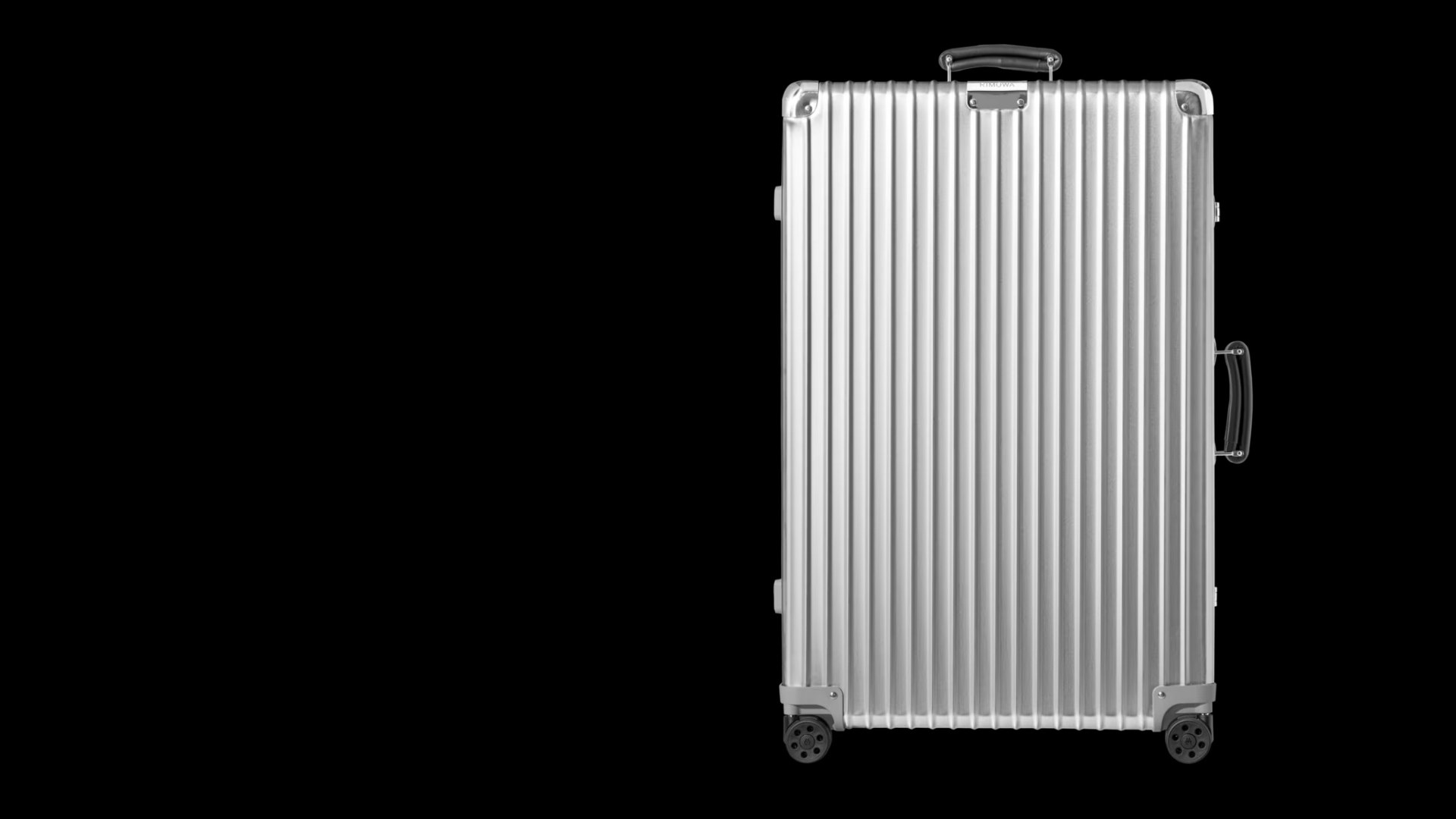
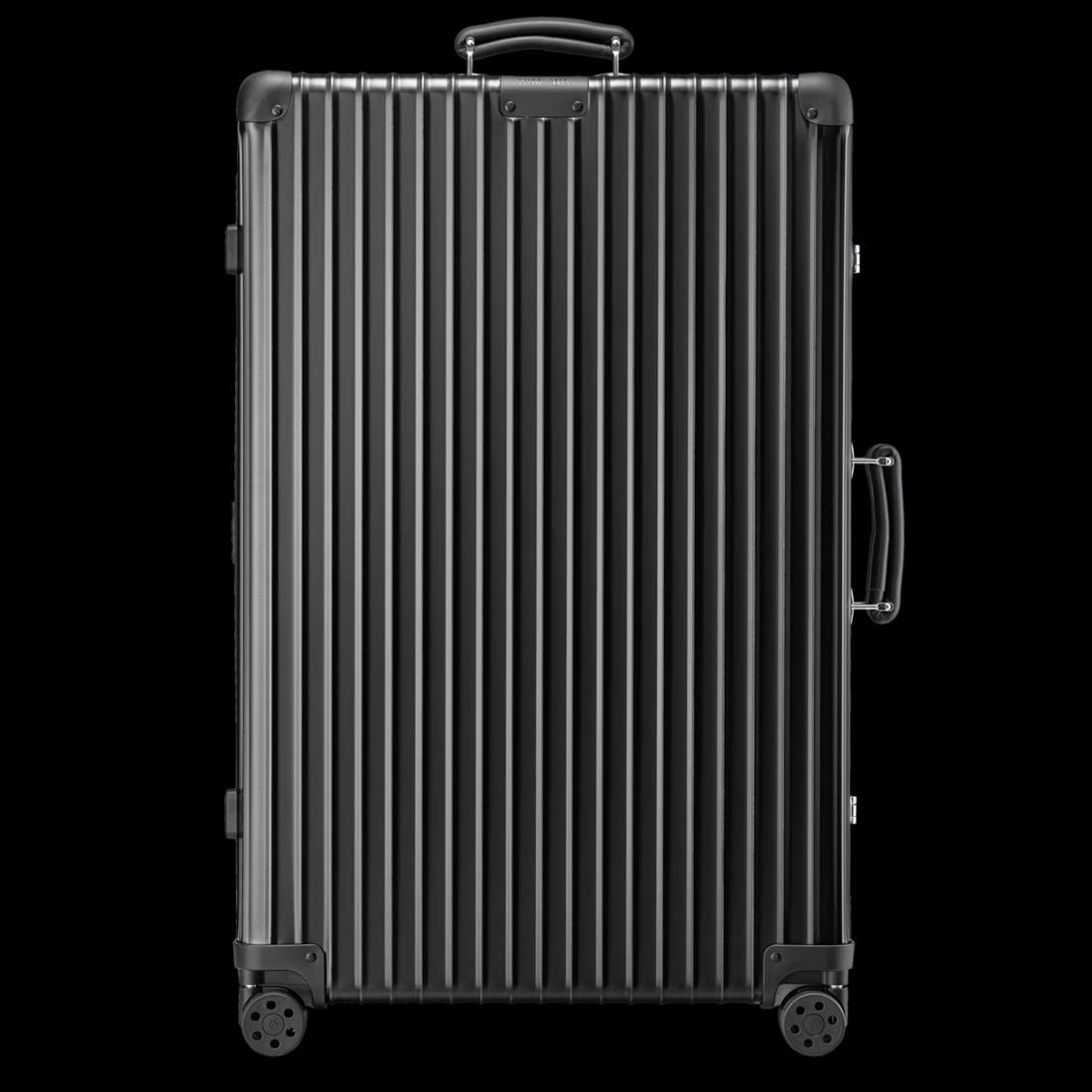
Look for the design and you can miss it, because the design is the restraint. There is no flourish here, no logo doing cartwheels, nothing that shouts. What there is — the parallel grooves pressed into the aluminium, the anodised finish that catches light like brushed steel, the leather-topped handle, the briefcase snap of the latches, the stageless telescopic handle that stops wherever your hand lets go — is executed to the last millimetre. That is the whole thesis of the thing: minimalism as the luxury, and the few details that remain made faultlessly. Pick up a plastic case straight afterwards and you feel the difference in your palm before you’ve thought a word — the RIMOWA is cold, dense, quiet; the other is a hollow shell waiting to be thrown around a hold. RIMOWA’s own product page calls it heritage design meeting precision engineering, and for once the marketing is telling the truth.
How a metal box became a status object
For most of its life RIMOWA was a quiet German engineering story: aluminium cases bought by pilots and photographers who needed something that wouldn’t die. Then, under new ownership, it swapped discreet product placement for a decade of loud, clever collaborations, and the culture caught up all at once. The Supreme drop is the one that pulled it in front of a younger crowd; Virgil Abloh’s Off-White version turned the case transparent; more recently Aimé Leon Dore cast it in that unmistakable sage green. Behind them sits a deeper bench — A Bathing Ape, the artist Daniel Arsham, Porsche, a Dior set directed by Kim Jones, Fendi, Moncler — the sort of guest list that tells you this stopped being ordinary luggage some time ago. It leaned in through its faces, too: the long-running Never Still campaign has fronted Rihanna, LeBron James and Roger Federer, and lately Kylian Mbappé, Rosé and Lewis Hamilton. Our favourite detail is the smallest one: in the campaign, Hamilton’s case wears a sticker of his dog, Roscoe. It tells you exactly what people do with these things. They don’t preserve them. They mark them.
The honest bit
Which brings us to the scratches. Aluminium is beautiful and aluminium is soft, and no amount of German engineering changes the fact that a baggage handler will treat a four-figure case exactly as they treat a £40 one. Check it in and it comes back dinged; do it enough and the mirror finish becomes a map. It’s heavy, too — six kilograms before you’ve packed a single sock, where a good polycarbonate case is nearer four, and on an airline with a 23-kilo ceiling that difference is holiday you’re leaving at home. The Classic is also the more delicate of RIMOWA’s two aluminium lines; people who’ve lived with both tend to say the sturdier Original is the one for the rough and tumble of commercial flying, and the Classic the one for gentler journeys.
And yet owners rarely seem to mind. There’s a well-worn reframe among them: the dents aren’t damage, they’re patina — a record of where the case has been. As one long-time owner puts it in an honest account of living with the aluminium, the marks become “not damage, but character.” Owners have a word for the scuffs the handlers leave, and it isn’t a complaint. It’s character.
The verdict
No score here, because we haven’t lived with this one — and inventing a number would be the one thing this journal won’t do. Instead, three honest questions.
Do you need it? No — and the emphasis is on need. Nobody needs a four-figure suitcase, in the same way nobody needs a five-hundred-pound t-shirt. Necessity was never what luxury was selling.
Is it worth the money? The craft is real: this is about as well-made as luggage gets, and the lifetime guarantee means it’s built to be mended rather than binned. But “worth” is a slippery word. You’re paying an aluminium premium for weight you’ll feel at every check-in desk and a finish that will scar. On a spreadsheet, no. As an object, that’s simply the wrong spreadsheet.
Should you buy it? If the gap between a four-figure case and a £100 one doesn’t trouble your bank account, and you genuinely love how things are made — then yes, without hesitation. If you’re stretching to afford it so you look the part at the carousel, you’ve misread the whole thing. This is a case for people who’ve stopped needing to prove anything — the same quiet certainty as checking into a hotel like the Jumeirah Al Naseem and not thinking twice. It’s the same test we put to a premium sleep tracker a while back: not “can I justify it?” but “does the cost even register?”
Those Singapore price cards were hiding this. Fourteen hundred and ten pounds for a beautifully made box to keep your clothes in. It is, by any sensible measure, absurd — and if you can absorb the number without flinching, it is also entirely worth it. The day £1,410 stops mattering is the day to buy the suitcase. Not one day before.
FAQ
What’s the difference between the RIMOWA Classic and the Original?
Both are RIMOWA’s grooved aluminium icons, but the Classic is the heritage design — leather handles, sharper corners, briefcase-style locks — while the Original has aluminium handles and rounder, sturdier corners. Owners generally consider the Original the tougher everyday traveller for checked commercial flights, and the more delicate Classic better suited to gentler journeys.
Does the aluminium scratch and dent easily?
Yes. Aluminium is soft, and airport handlers treat it like any other bag, so a checked Classic will pick up scuffs and dents. Many owners embrace this as patina — a badge of honour and a map of their travels — rather than damage. If you want it kept pristine, a carry-on size and a clear protective cover both help.
How much does the Check-In L weigh, and is it heavy?
Six kilograms empty — noticeably heavier than a polycarbonate case, which is often nearer 3.5–4.5 kg. On airlines with a 23 kg checked allowance, that’s real packing weight spent on the case itself, so factor it in before you buy.
What does RIMOWA’s lifetime guarantee cover?
Registered RIMOWA suitcases carry a lifetime guarantee on functional damage — wheels, handles, locks and shell integrity — for the life of the case. It does not cover cosmetic scratches and dents, which are treated as normal wear.
How big is the Check-In L, and what trip is it for?
It measures 79 × 52 × 28 cm with a capacity of 84 litres, which RIMOWA pegs at roughly two weeks of travel. Note that its total dimensions exceed the common 158 cm airline sum limit on some carriers, so check your airline before flying.